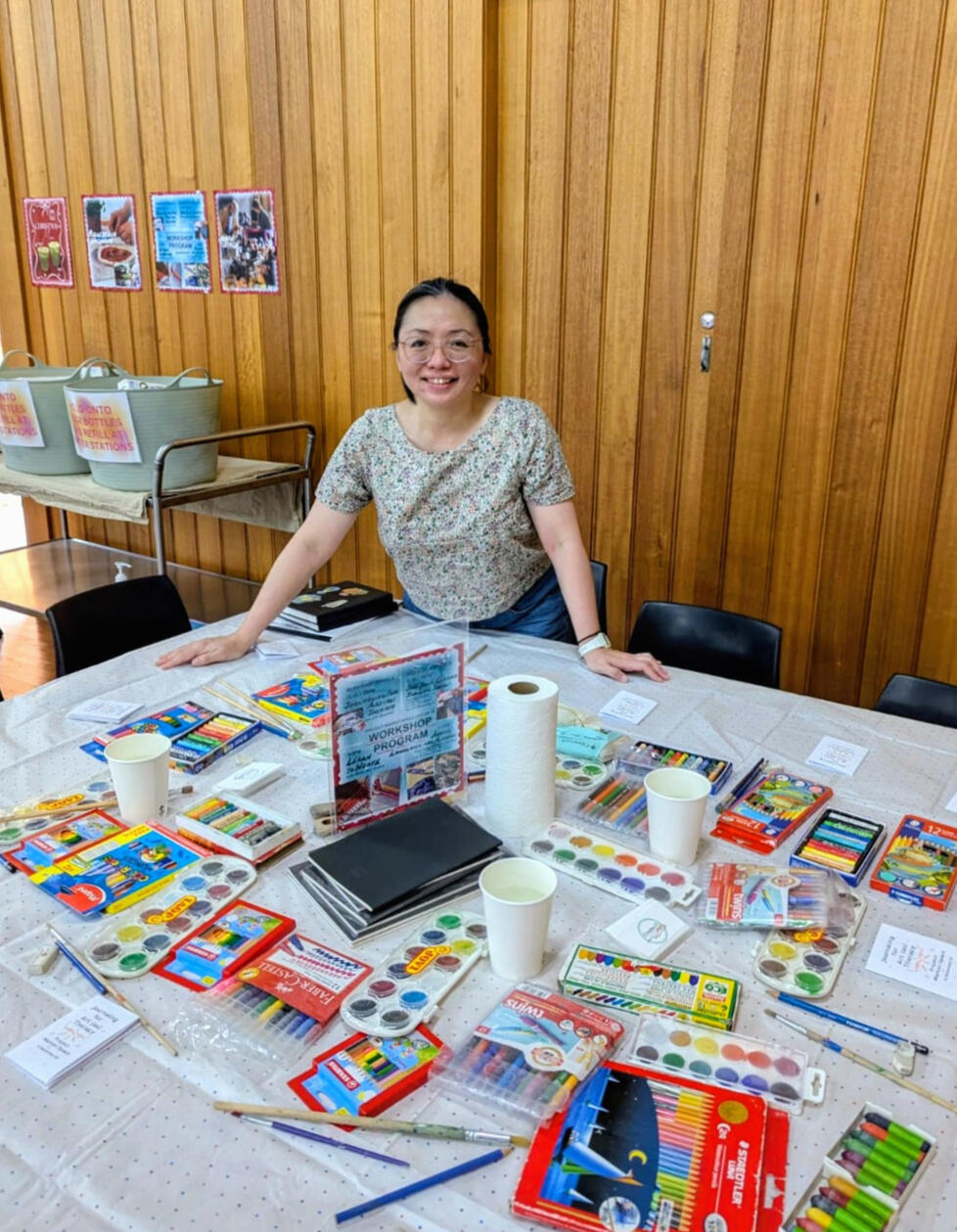
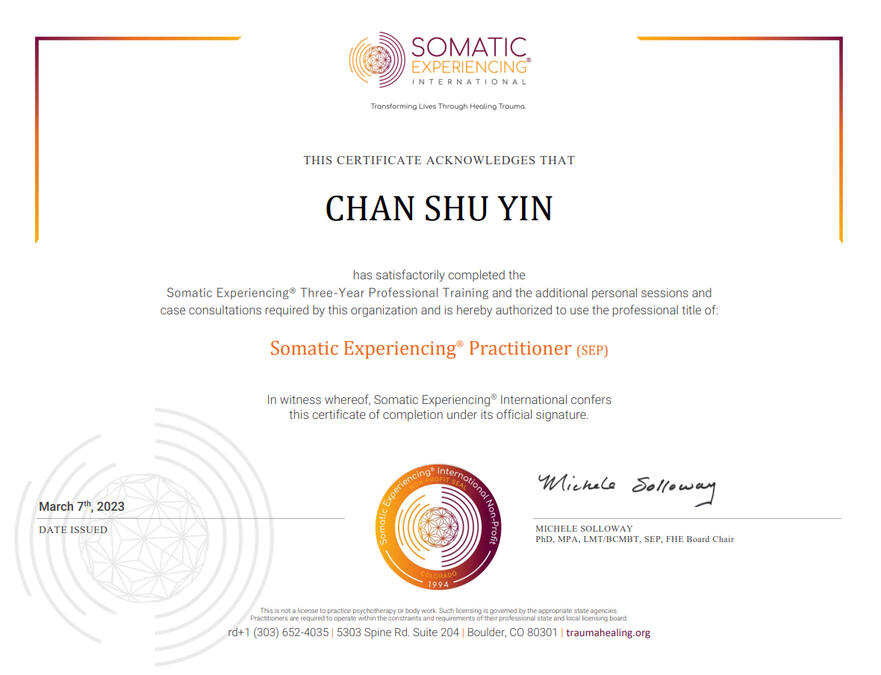
Simone Shu Yin Chan is a Somatic Experiencing® Practitioner, art therapist and craniosacral therapist specialising in complex trauma, and often works with autistic and/or ADHDer individuals.She sees clients in Sydney - Bondi Junction, Hurstville, and online.We pay our deep respects to Elders past, present & emerging of the Gadigal and Bidjigal people, custodians of the land and waters that we are privileged to live and work on.
Simone's therapeutic work is client-led, giving space and time for the client to express, process and slowly integrate the answers they arrive at for themselves. She uses a bottom-up approach which is ideal for trauma survivors and neurodivergent individuals. As someone with lived experience, she has deep empathy for her clients, and is cognisant of when to guide and when to step back to allow clients agency over their own process.

Simone Shu Yin Chan
Art Therapist,
Somatic Experiencing® Practitioner,
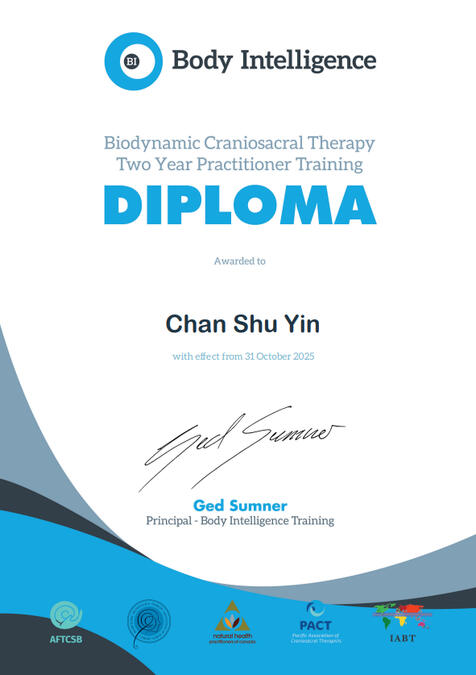
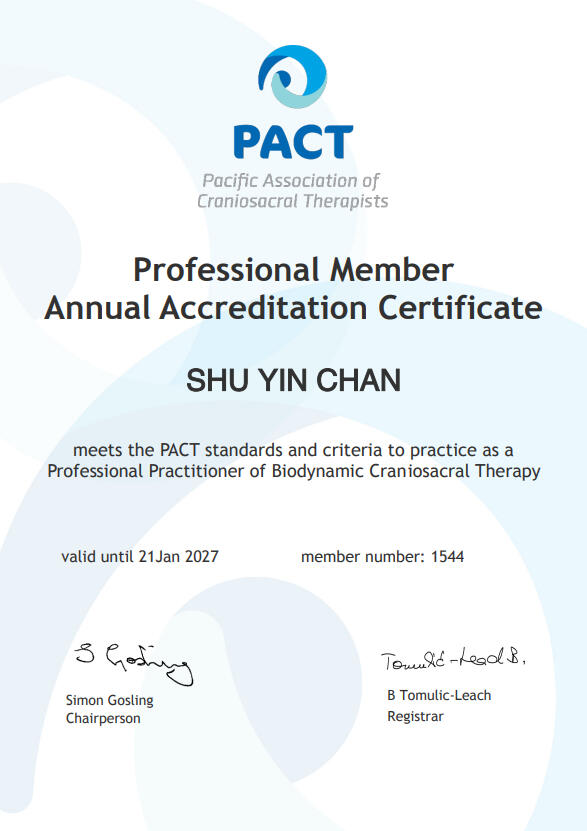
Biodynamic Craniosacral Therapist
MA, AThR, SEP™, RCST
Pronouns: She/herSimone works with adults and teens seeking deeper healing. Her clients include people who've experienced emotional, physical and sexual abuse. She has a passion for fellow Autistic and/or ADHDers and has journeyed with them to heal from trauma, burnout, and discover and honour their authentic selves. She uses a bottom-up approach with a deep appreciation for the body-mind connection in trauma healing.Apart from private practice, Simone has provided group and/or individual art therapy to community organisations serving stroke survivors, elderly, adolescents, youths in family crisis shelters, community mental health facilities, and schools in Singapore from 2019. She has assisted at beginner & intermediate level SEP professional trainings by Dr Abi Blakeslee.She has been living in Sydney, NSW Australia since 2024 with her husband and cat Pooky, an elderly rescued tabby who made the long voyage. Simone enjoys making art, knitting, yoga and being in nature.

For questions and appointments,
you can use the form below and we will get back to you in 1-3 days. Please also check your spam folder if you don't hear back.
creativetraumahealing
@gmail.com
0475133561
(whatsapp/text preferred)
2/15 Bronte Rd, Bondi Junction, NSW
Medicinal Collective
(Wed afternoons from 2pm
and Sat mornings til 2pm)
Hurstville, NSW
4 minutes walk from the train station
(Tuesdays & Thursdays,
exact location will be provided on confirmation of session. Special rates available)
Telehealth
(Mondays, Tuesdays, Thursdays, Fridays)
Mon, Tue, Thur, Fri: 9am to 7pm
Wed: 2pm to 8pm
Sat: 9am to 2pm
(by appointment only)
ABN: 33291751189
Copyright Simone Shu Yin Chan, 2026
Art Therapy
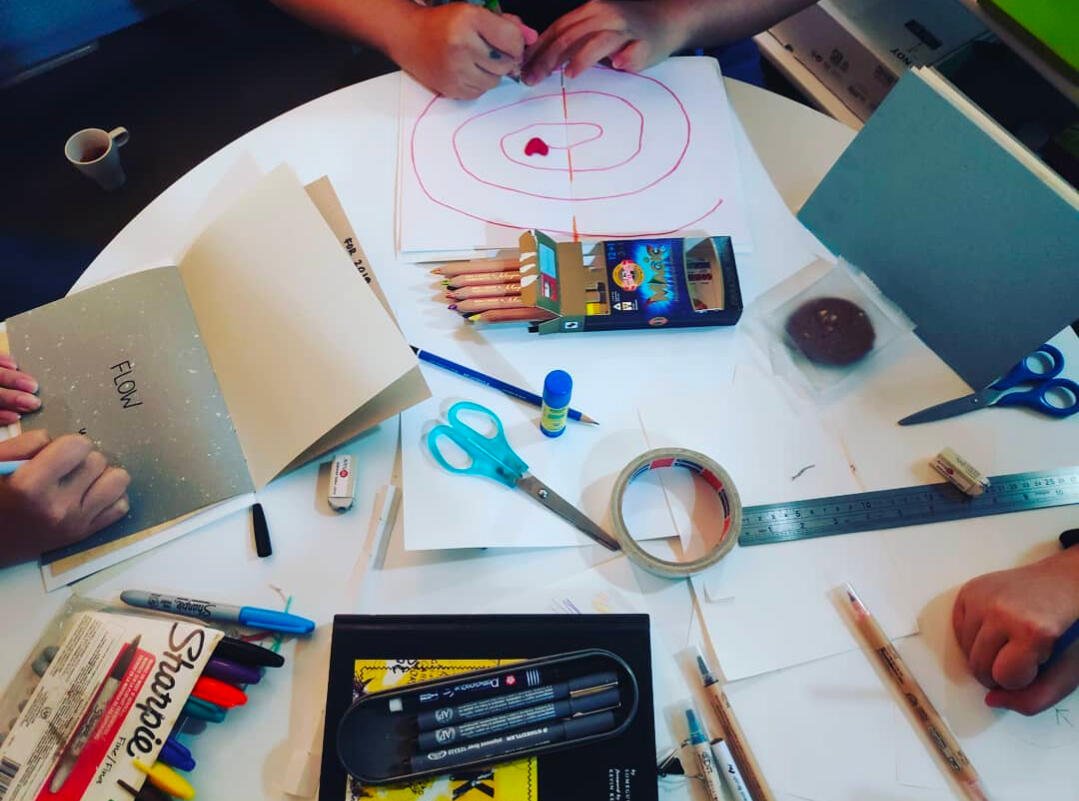
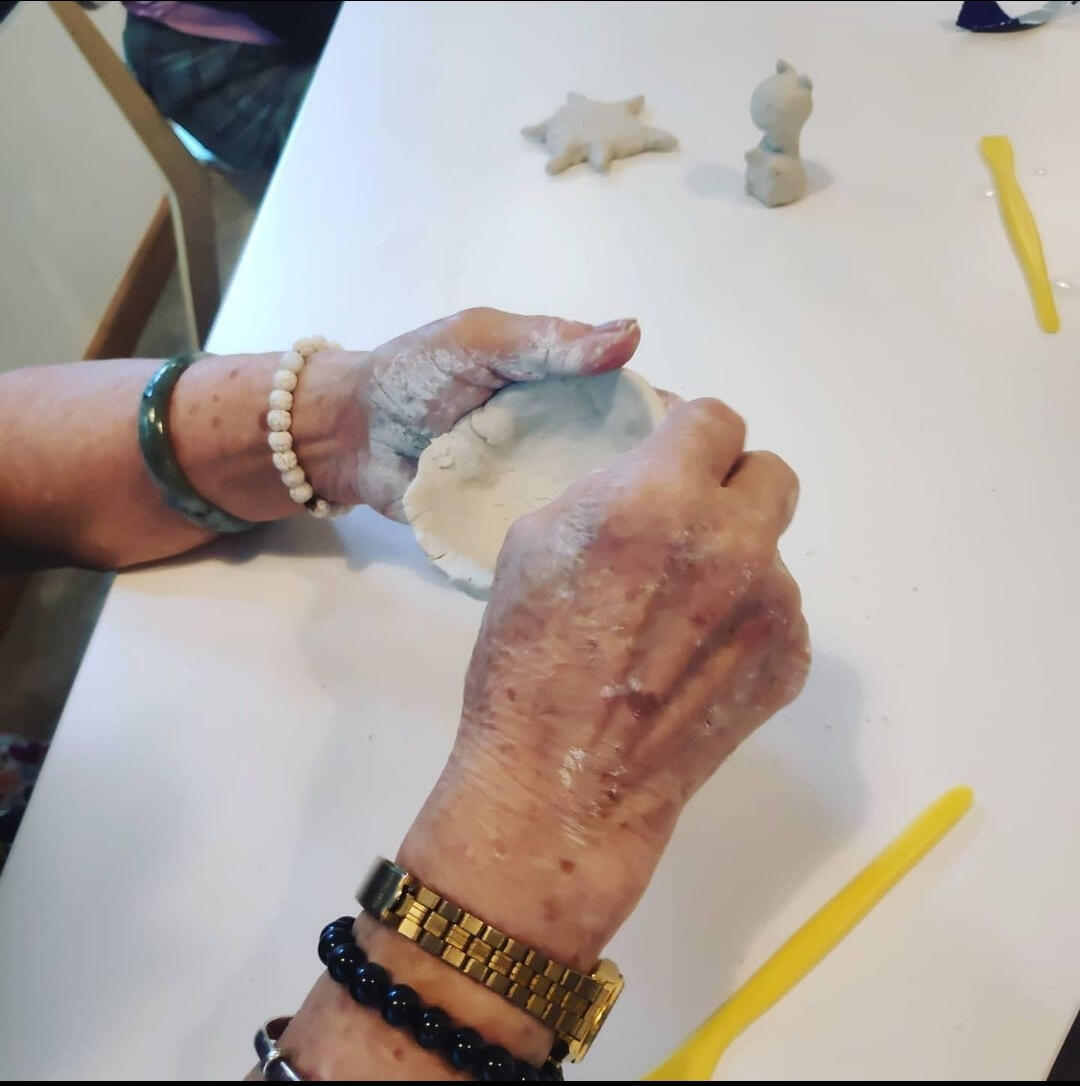
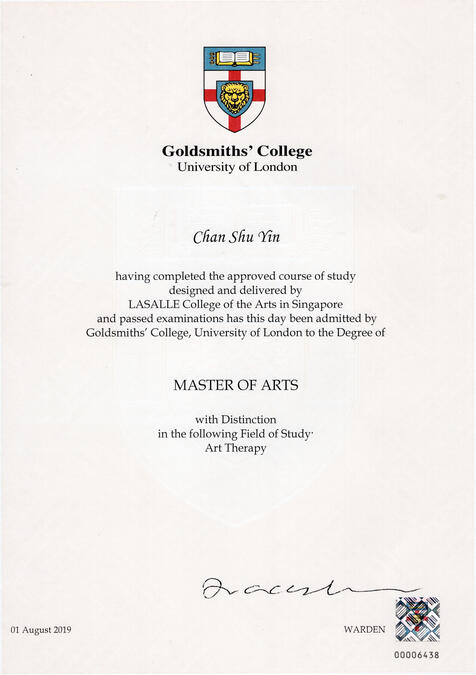
Creativity has been the foundation of Simone's therapeutic work since obtaining her Masters in Art Therapy in 2019. Creativity is a healing resource available to anyone and everyone. As people heal, they become more creative across all areas of their lives.
Art therapy is a mental health modality using the art-making process, materials, and the therapeutic relationship to facilitate wellbeing for the client. The physicality of the art materials and processes, enable the client to express how they are feeling without the need for words. Art-making may also help bring to awareness, deeper emotions and conflicts residing in the person’s psyche.
Trauma-informed Art Therapy‘Trauma’ is a broad term for a person’s experience of a single or multiple distressing event(s), and may include complex trauma, which is relational trauma occurring over long periods of time such as emotional, physical, sexual abuse or neglect. Such forms of trauma especially during a person’s early life, can shape our beliefs and how we relate to others and the world. The Adverse Childhood Experiences study by Felitti et al (1998) has shown how childhood adversity affects physical and mental health well into adulthood, also increasing the likelihood of health-harming behaviours such as alcoholism and drug addiction.Talk therapy may help a person arrive at narratives about their trauma, but what one knows cognitively may feel disconnected from one’s feelings. Trauma-informed art therapy prioritises the sense of safety for the client, and does not solely focus on verbal narration of the trauma as a form of healing. As a psychodynamic modality, art therapy works (either directly or indirectly) with a person’s family of origin and developmental relationships. The therapeutic relationship with the art therapist is also a core aspect of art therapy, with emphasis on building trust to facilitate healing from attachment trauma.Furthermore, art therapy works with the body through physical movements to regulate the nervous system, offering grounding for a nervous system often overstimulated due to earlier trauma. Art therapy’s effectiveness as a mind-body treatment for trauma is increasingly being recognised through evidence-based research.
Neurodivergence Affirming Art Therapy
Neurodivergence is a part of nature and is an evolutionarily beneficial trait, but medical systems have instead historically pathologised it. It is important for mental health professionals to view neurodivergence from a strengths-based perspective and be aware of the impact of systemic ableism on a person's mental health.Art therapy can be very beneficial for neurodivergent (ND) people such as those with ADHD and/or Autism. Artmaking engages more than the spoken word. The use of images aligns with how ND people often think visually, making it easier for them to communicate through art. The kinesthetic (movement) and sensory nature of materials are added dimensions that attract many ND as they appreciate the embodied, intuitive and grounding nature of art therapy. The art processes and products hold inherent layers of meaning and significance. Having hyperconnected brains makes many ND people creative and unencumbered by social rules. Art therapy harnesses their creativity as a strength to build self confidence in an ableist society where they are often held to neurotypical standards.ND people often face prejudice in a society that values conformity over diversity. Art therapy can help with processing the complex trauma which inevitably arises from being misunderstood and unsupported as a minority neurotype. Learning about one's unique personality and what works for them, loving themselves and getting in touch with authenticity are positive outcomes of art therapy for ND people. They could also learn emotional regulation techniques to help them cope with the stressors of daily life. Making sense of relationships and its complex dynamics is another important area that we could work on in therapy.
Somatic Experiencing®
Somatic Experiencing® (SE) was developed by Dr Peter Levine, founder of the Somatic Experiencing® International. In SE, we consider the mind and body in its entirety and use the nervous system as a holistic resource to help ground and regulate when processing trauma. Trauma can be stored in the body from interrupted fight or flight responses. By taking the client’s needs and comfort levels as a lead, we guide them to complete the stress response cycle, releasing them from the cycle of trauma. By processing trauma at a deeper level, we are less likely to get as activated the next time we are exposed to the same stimuli and are better able to stay in the window of tolerance.
Somatic Experiencing® can help with:Depression
Anxiety
Lack of motivation, feeling stuck
Sleep issues
Nightmares
Irritable Bowel Syndrome
Stress
Relationship or family related stress
Trauma from an isolated incident
Complex trauma from small microaggressions over an extended period
Physical, emotional, sexual abuse
Disability stress
Minority stress
Transitions and sudden life changes
Attachment issues
Developmental trauma
Medical trauma
Other psychosomatic issues
Somatic Experiencing for Autistic and/or ADHDers
Somatic Experiencing® is a form of bottom-up processing that can help many neurodivergent people such as Autistic people or ADHDers. By bottom-up processing, we pay attention to what our body is telling us as a sign for what to do next. This is the opposite from top-down processing, where we listen to the mind’s instructions to tell the body what to do.As neurodivergent people often need to change their ways of being to fit into society, bottom-up processing allows them to honour their senses and feelings for a change instead of ignoring them. If some channels such as emotions or sensation are difficult for some people to notice due to Alexithymia or interoceptive differences, we can use other channels like image, movement, or vocalisation, to help in the trauma therapy.Top-down methods can feel counter-intuitive to neurodivergent people who may already struggle with executive functioning and emotional regulation, and bottom-up processing through SE can help with that. PDA, Pathological Demand Avoidance or Pervasive Drive for Autonomy, may also be a common experience for many neurodivergent people which makes top-down processing harder in modalities such as solution-focused talk therapy or Cognitive Behavioural Therapy. SE can help you learn what your body needs, and what we do next will be informed by that.
Biodynamic Craniosacral Therapy (BCST)
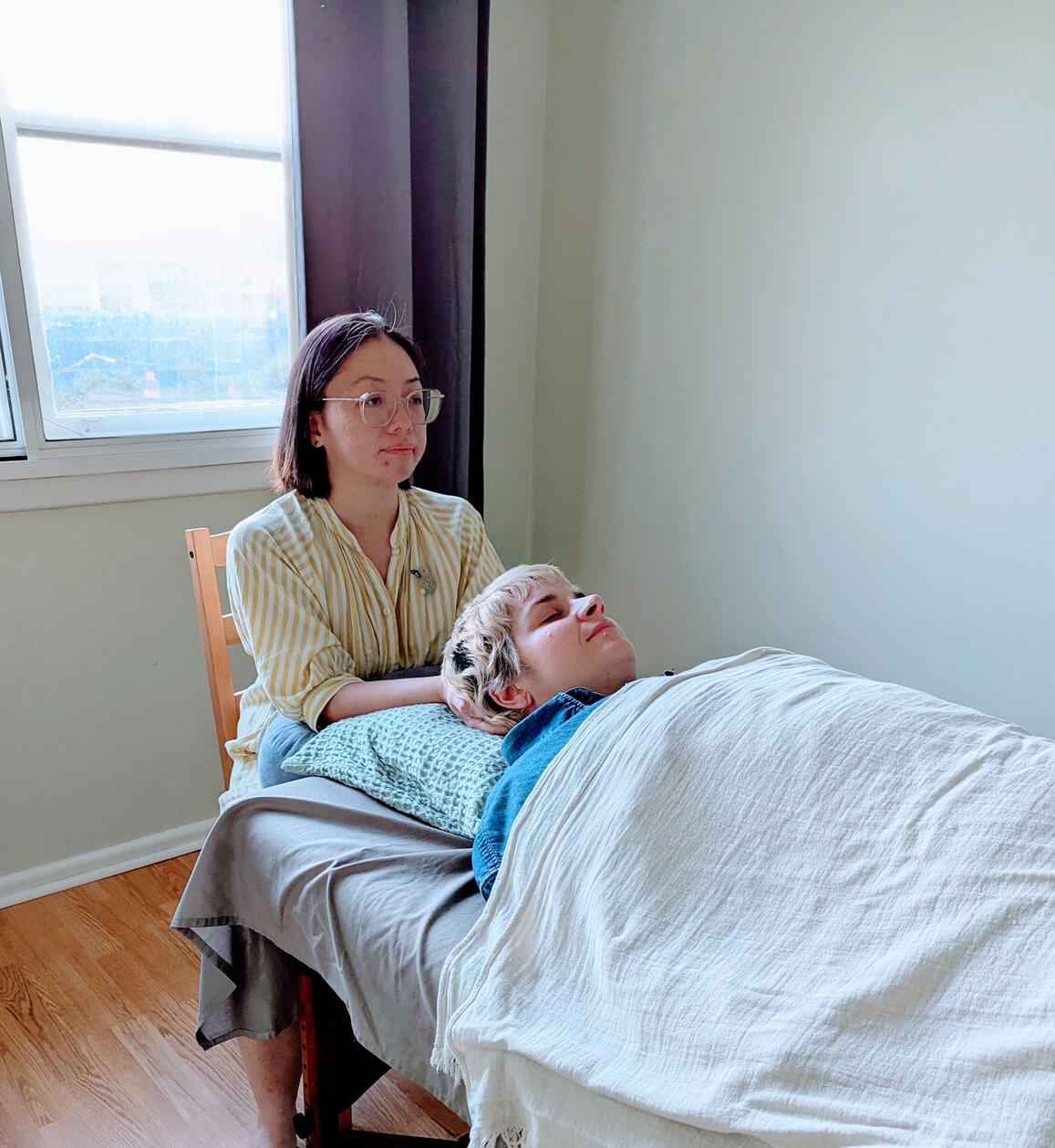
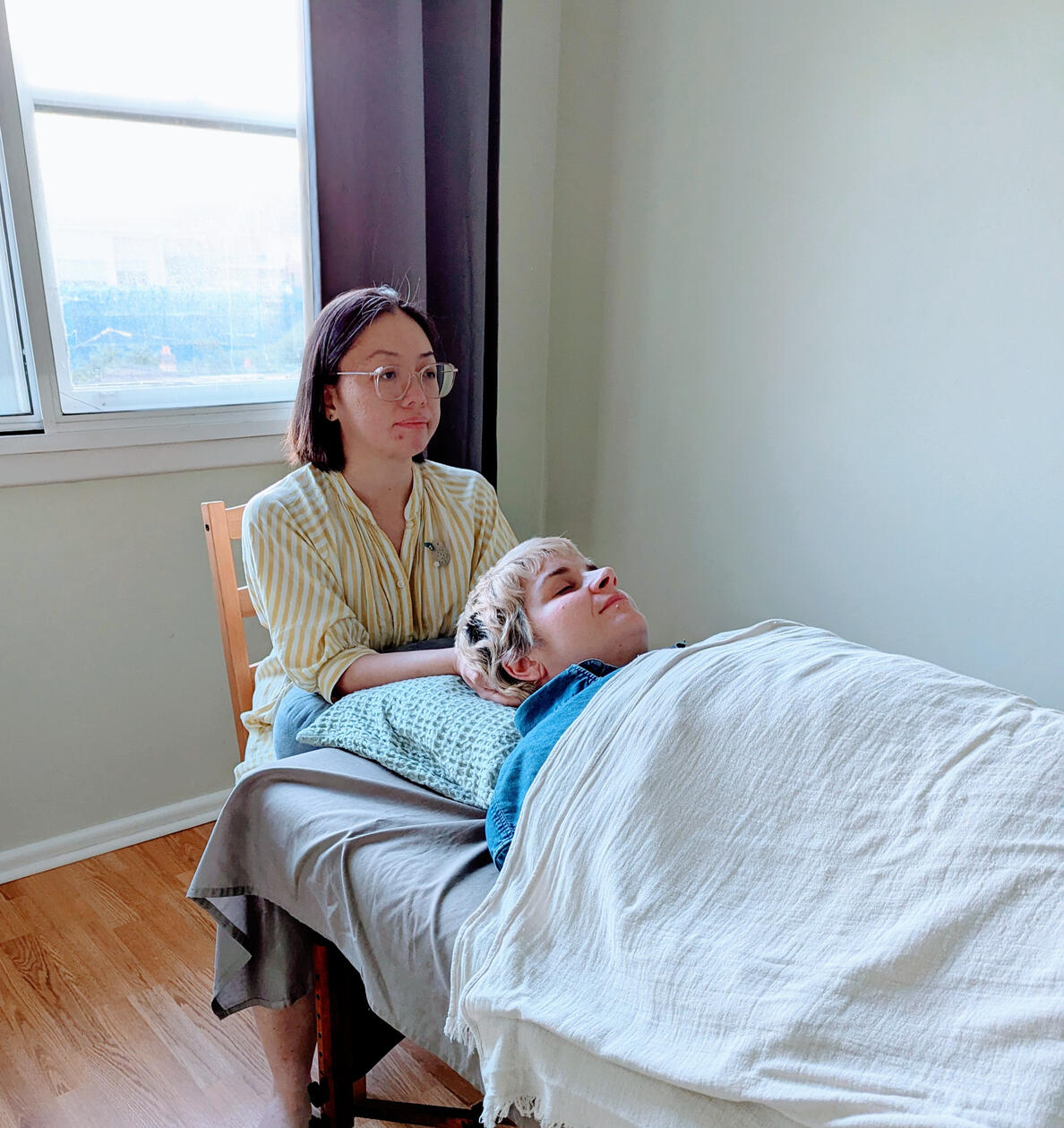
BCST originated from osteopathy which adopts a holistic view of the body and mind. BCST involves neutral holds and a relational field created by the therapist, that activates the client's natural healing forces. The safe environment creates the conditions for the body to tap into its embryonic blueprint for health, to express and heal itself.The therapist is educated in living anatomy and an understanding of systems in healing. An attuned presence and listening with the hands to the body's subtle forces enables the therapist to sense health and potency, as well as areas where there might be tension or disconnection. Working with the cerebrospinal fluid and fluids of the body allows tension to be released in the fascia, regulate the nervous system and reach a state of balance and wholeness.
What happens in a session?The client lies with their back on the massage table and closes their eyes. The therapist begins with a neutral and light hold at the ankles. The therapist listens with their hands to the 'rhythm' of the body, its Breath of Life. The therapist would sense which position to move to next, depending on what the body expresses in the moment and what the client presents with.
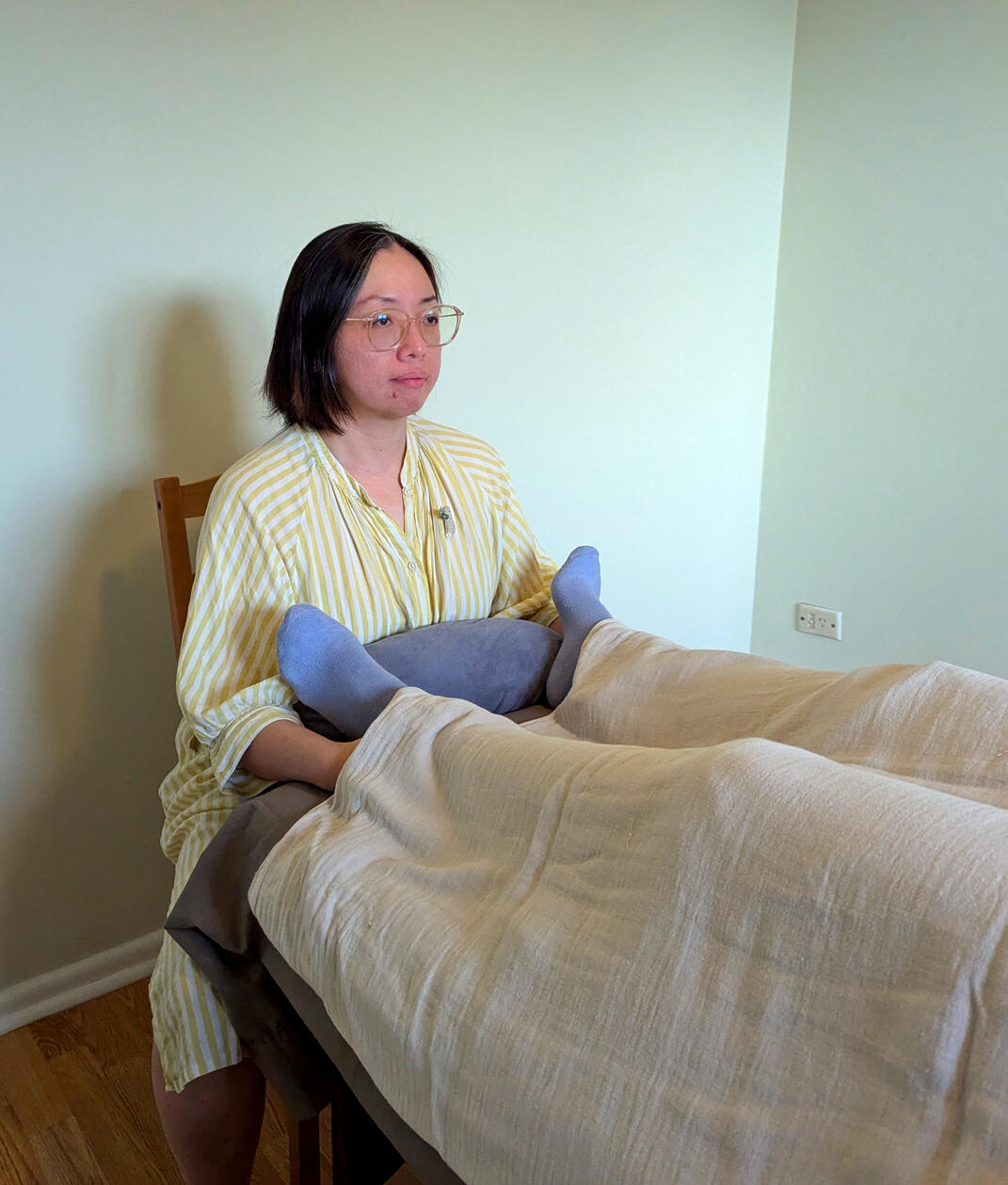
What will I experience in the session?Each person's experience will be unique, but generally one can expect to notice sensations in the body that change through the course of the session. As we are working with the fluids in the body, I would use the metaphor of being on the sea. At the start it's like being at the water's surface where it's more choppy, so you might notice sensations like spontaneous releases or twitching. You might notice sensations at areas away from the therapist's hands, as the parts of the body are connected. As the session moves along, the sensations might become more wide, spreading to a larger area of the body but also becoming less spontaneous. You might feel a sense of 'flow' as if going deeper into the ocean. As the session progresses, we are going even deeper, and you might feel a sense of stillness, peace and heaviness. Like being in a state of deep rest. While this is ideal, some people might need more sessions to arrive at this state, especially with more trauma and less resources.Read more about BCST at the Body Intelligence website.
Services & Rates
In-person initial sessions in AUD
Bondi Junction (20% off)
| Service | 75 min |
|---|---|
| All in-person initial sessions | 150 |
In-person standard sessions in AUD
Bondi Junction
| Service | 60 min | 90 min |
|---|---|---|
| Somatic Experiencing® & Art Therapy | 150 | 215 |
| Biodynamic Craniosacral Therapy | 150 | 215 |
| Biodynamic Craniosacral Therapy & Somatic Experiencing® | - | 215 |
For Hurstville location on Tuesdays & Thursdays: $20 dollars off
*For clients requiring both verbal therapy (SE®) and craniosacral therapy, it is adviseable to do a 90 minute session.
Online sessions in AUD
| Service | 60 min |
|---|---|
| Somatic Experiencing® & Art Therapy | 150 |
Cancellations and rescheduling allowed until 24 hours before the session. 50% charge after that.
We do not offer insurance or Medicare, but art therapy can qualify for NDIS under Therapeutic Supports.
Credentials
Frequently Asked Questions
General
Q: Do you offer any rebates such as Medicare or insurance?The modalities we practise are unfortunately not covered by Medicare or insurance in general. There may be cases where it might be covered under 'alternative therapies', but it's best to check with your insurance provider.
Q: What can I expect in the first SE/art therapy session?The first session is an introduction and a chance for the client and therapist to get to know one another. Topics discussed in the first session include: what are the clients’ strengths and interests, and what are their hopes for therapy. The client can ask questions about the therapy and share what they expect out of therapy. The client will have the chance to make art to introduce themselves, if they prefer that over talking. Subsequently, the client can bring up any issues or topics they would like to explore or process in each session. They will have the chance to either talk about it, make art, or process it somatically through Somatic Experiencing. The therapist will keep track of the client’s progress over several sessions, but each session is meant to have its own form of closure, be it big or small.
Q: Why is therapy so expensive?As a mental health practitioner, our expenses include mandatory supervision, training and professional membership fees. The fees also go towards covering rent, art material expenses, website, marketing, and time spent on documentation.Apart from NDIS subsidies for eligible participants, we are not otherwise funded by the government or donations. We do strive to keep our rates affordable for clients as much as we can and this is reflected in the fees.
Q: What’s the difference between Counselling and Psychotherapy?It is generally thought that Counselling is more solution-focused, with more structured and tangible outcomes that can be short to medium term.Psychodynamic psychotherapy hopes to deal with deeper issues and coping patterns that may originate from complex trauma or areas such as our upbringing, family of origin and attachment styles.Art therapy & Somatic Experiencing may be said to be ‘indirect’ in that the therapy is client-led and the therapist uses more than verbal communication to effect healing in the client for sustained, medium to longer term growth.In psychotherapy, the answers to the issue are not given outright to the client, as the client may not be at a stage where they are able to accept the solution immediately. Instead, figuring out together what works best for the client in a process-oriented manner, allows the answers to emerge for the client to discover in a way that works for them.
Q: I am not sure if the therapist is experienced enough or has the capability to support me. How would I know if she is the right therapist for me?Everyone has the right to choose a therapist who is the right fit for you. You may ask questions and communicate with the therapist your concerns, to assess if the therapist is the right one for you.Through the course of therapy, you may also communicate with the therapist if there are any issues or if you feel misaligned with where the therapy is going. A healthy therapeutic relationship is a two-way street and it is important to raise any concerns you may have with your therapist.On our end, there would also be an intake process that would require new clients to fill an intake form. In the first one or two sessions, the therapist would assess your needs and discuss your therapeutic goals with you. At the intake stage or initial assessment, the therapist may refer you to other therapists whose area of expertise are more suited to your needs.
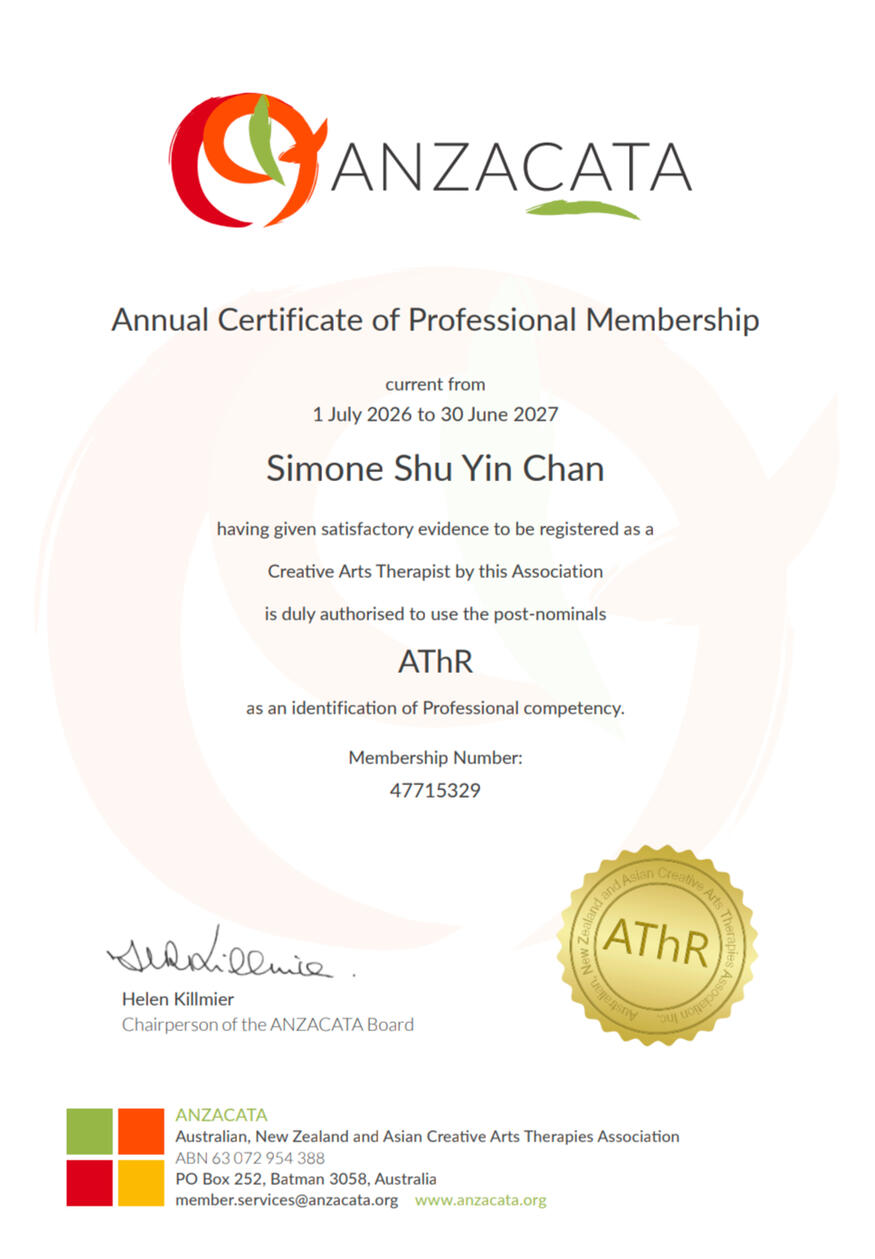
Q: I am afraid that what I say, or my artwork, would be seen by others. How would my confidentiality be protected?We abide by ethical confidentiality practices in line with the Australian, New Zealand, and Asian Creative Arts Therapies Association (ANZACATA). Client artwork and what is said in the session would be kept confidential, unless the client has expressed that safety (of the client or otherwise) is compromised. The client would be asked to sign a consent form for the artwork to be photographed, and session material to be used for supervision purposes.
Q: Is the therapist supervised?The art therapist undertakes professional clinical supervision under ANZACATA guidelines for credentialed art therapists. She has regular clinical supervision in Somatic Experiencing, Art Therapy and/or Biodynamic Craniosacral Therapy by approved supervisors. She attends regular training and self-study to ensure she is up-to-date with current ethical practices.
Art Therapy
Q: Do we have to be good in art to do art therapy?No, one does not have to be trained or considered proficient in art, to engage in art therapy. Art therapy focuses on the creative process and not the art product, in providing benefit to the client.
Q: I don’t know how to draw or paint. How would I be able to benefit from art therapy?In art therapy, you would be offered a range of materials to choose from, to start creating. If you are stuck, the art therapist may offer some guidance or suggestions. However as it is an art therapy and not an instructional art session (unless stated), the objective of the session would not be to create an aesthetically pleasing product. As sessions progress, the art therapist may suggest certain materials or art activities to address certain therapeutic objectives for the client.
Q: Who can benefit from art therapy?Art therapy has been used with various populations ranging from young to the elderly. A person who is able to be in the art therapy studio safely with the art therapist would be able to engage in art therapy. Before the first session, the client would have to fill up an intake form indicating the reasons for seeking art therapy.
Biodynamic Craniosacral Therapy
Q: Is there anything we need to do to prepare for the session?Not particularly, although it may be good to avoid having a heavy meal right before the session. You can also wear something comfortable and/or loose, so that you can feel relaxed during the session.After the session for the rest of the day and the next day, try not to do overly strenuous or stressful activities, to give your body time and space to integrate the benefits of the therapy.
Q: Are there any safety considerations for doing Biodynamic Craniosacral Therapy (BCST)?
Somatic Experiencing®
Q: How is Somatic Experiencing® carried out in a session?Somatic Experiencing® will be integrated into the session, be it with talk, art, or craniosacral therapy. At times, the therapist might invite you to notice what you are sensing or feeling in your body, or if any images are coming up. At other times, the therapist might ask if there is any movement, words, or sounds your body feels like making. It is always invitational, so you can always say no or tell the therapist if you are not comfortable with it. The therapist might also do some psycho-education to let you know more about your nervous system and what can be done to help you feel better.
Q: Can we do Somatic Experiencing® online?If you are able to have therapy online, then Somatic Experiencing® can be done online. What we need are a safe and private space for you to have the session, a stable internet connection and a device such as computer with web camera or smart phone. We regret that for clients who are at a risk of not being able to keep themselves safe from harm during and after the session, online sessions would not be suitable and would recommend in-person sessions at our central Sydney office.